
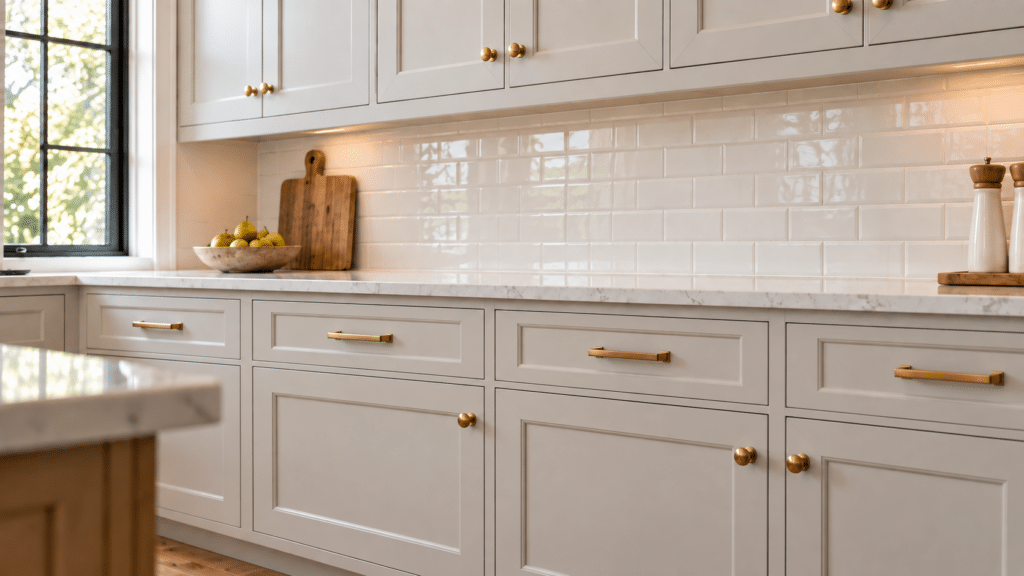
Do your kitchen or bathroom cabinets look dated, worn, or simply no longer fit the style you want? Replacement may seem like the obvious solution, but if the cabinets themselves are still in good condition, you may not need to scrap them. Cabinet refinishing can give existing cabinetry a completely different appearance without changing underlying boxes or layout. Replacement makes more sense when the cabinetry itself no longer works for your space.
Which option is right for your home? It depends on your cabinets’ condition, the look you want to achieve, your current layout, and how extensive a project you’re willing to take on.
What Is Cabinet Refinishing?
Refinishing updates the appearance of your existing cabinetry while keeping its boxes and basic layout in place. This process can include cleaning and degreasing surfaces, removing doors and hardware, sanding or otherwise preparing the existing finish, repairing minor defects, priming, and applying a new painted finish.
In short, cabinet refinishing is more involved than applying a fresh coat of paint. Proper surface preparation is important for both the appearance and performance of the finished coating.
Refinishing can significantly change the look of a kitchen or bathroom, but it doesn’t change the basic cabinet layout, dimensions, or construction.
What Does Cabinet Replacement Involve?
Cabinet replacement means removing existing cabinets and installing new ones.
This gives you much more freedom to change the layout, dimensions, style, storage configuration, and overall function of the space. If your current cabinets are poorly arranged or no longer meet your storage needs, replacement may give you options that refinishing cannot.
Keep in mind that replacement is also a more extensive renovation. Depending on the project, it can affect surrounding countertops, backsplashes, flooring, plumbing, appliances, and other finishes. New cabinets may also need to be ordered, delivered, installed, and coordinated with other renovation work.
When Does Cabinet Refinishing Make Sense?
Cabinet refinishing can be a practical choice when the cabinets themselves are still solid and functional, but their appearance needs an update.
It may be worth considering if:
- The cabinet boxes are structurally sound.
- Doors and drawers are still in usable condition.
- The existing layout works well for your household.
- You primarily want to change the color or finish.
- The cabinets look dated but aren’t significantly damaged.
- You want a visual update without replacing the entire cabinet system.
A cabinet can look old-fashioned without actually being worn out. If the construction is still in good condition, refinishing may allow you to keep what works while changing what you see.
When Is Cabinet Replacement the Better Option?
Replacement may make more sense if the cabinet boxes are significantly damaged, warped, deteriorated, or affected by substantial water damage. You may also prefer this option if the existing layout no longer works for your space—i.e., you need more storage, want to change cabinet dimensions, or are redesigning the kitchen as part of a larger renovation.
The key distinction is whether you want to change the appearance of the cabinets or the cabinets themselves.
If the problem is cosmetic, refinishing may be enough. If it involves the condition, configuration, or function of your cabinets, replacement may be the better route.
How Much Can Cabinet Refinishing Change the Look of a Kitchen?
Cabinets occupy much of the visual space in many kitchens, so changing their color and finish can change the feel of the entire room.
Refinishing can brighten darker or dated cabinetry, introduce a more modern neutral, or coordinate the cabinets with new wall colors, countertops, flooring, fixtures, and other finishes.
That said, refinishing doesn’t change the shape or profile of the cabinet doors. It can transform the appearance, but not the underlying style.
Is Cabinet Refinishing Less Expensive Than Replacement?
Cabinet refinishing generally involves keeping much more of the existing cabinetry, so the project scope can be considerably smaller than full replacement.
Actual pricing will depend on the specific cabinets and the work involved.
Factors can include:
- Number and size of the cabinets
- Condition of the existing finish
- Amount of surface preparation required
- Cabinet configuration
- Repairs that may be needed
- Type of coating system being applied
Replacement includes the cost of new cabinets and their installation, plus removing the old ones. Depending on the scale of the renovation project, there may also be countertops, backsplashes, flooring, plumbing, or other nearby components that will factor into the price.
How Long Does Cabinet Refinishing Take Compared With Replacement?
Refinishing depends on the number of cabinets, their condition, what prep work is required, the coating system, and drying or curing times between stages. Replacement can involve additional steps, including removing the old cabinets, waiting for new ones to arrive, installation, and coordinating any related work around them.
Neither process should be rushed. With refinishing in particular, proper preparation and adequate drying or curing time are necessary for high-quality results.
What Preparation Is Needed Before Refinishing Cabinets?
Preparation is important because kitchen and bathroom cabinets can accumulate grease, residue, fingerprints, cleaning products, and everyday wear. Depending on the cabinet material and existing finish, preparation may include cleaning and degreasing, removing hardware, sanding or deglossing surfaces, repairing minor defects, masking and protecting nearby areas, and priming before the finish coats are applied. Countertops, flooring, appliances, walls, and other surfaces around the cabinetry also need to be protected while work is performed.
The exact process will vary depending on the cabinet surface and coating system being used.
Can Every Cabinet Be Refinished?
Whether a cabinet is a good candidate for refinishing depends on its construction, surface material, existing coating, and overall condition.
Some cabinet surfaces need specialized prep, while others may simply not be suitable. Repair or replacement may be better if cabinets show signs of significant deterioration, structural damage, or heavy moisture intrusion.
Cabinet Refinishing vs. Replacement: How Do You Decide?
If you’re evaluating your cabinets, a few questions can help you decide which option is more appropriate:
- Are the cabinets structurally sound?
- Does the existing layout still work for you?
- Are you mainly unhappy with their color or appearance?
- Do you want a cosmetic update or a larger renovation?
If yours are solid, functional, and arranged the way you want, refinishing may give you the update you’re looking for without replacing what still works. If the cabinetry is damaged, poorly configured, or no longer meets your needs, replacement may make more sense.
Let’s Talk About Your Cabinets
If you’re considering cabinet refinishing, Samia Painting can evaluate your existing cabinetry, discuss the look you want to achieve, and determine the best solution for your home.
Contact us to schedule a free estimate!