
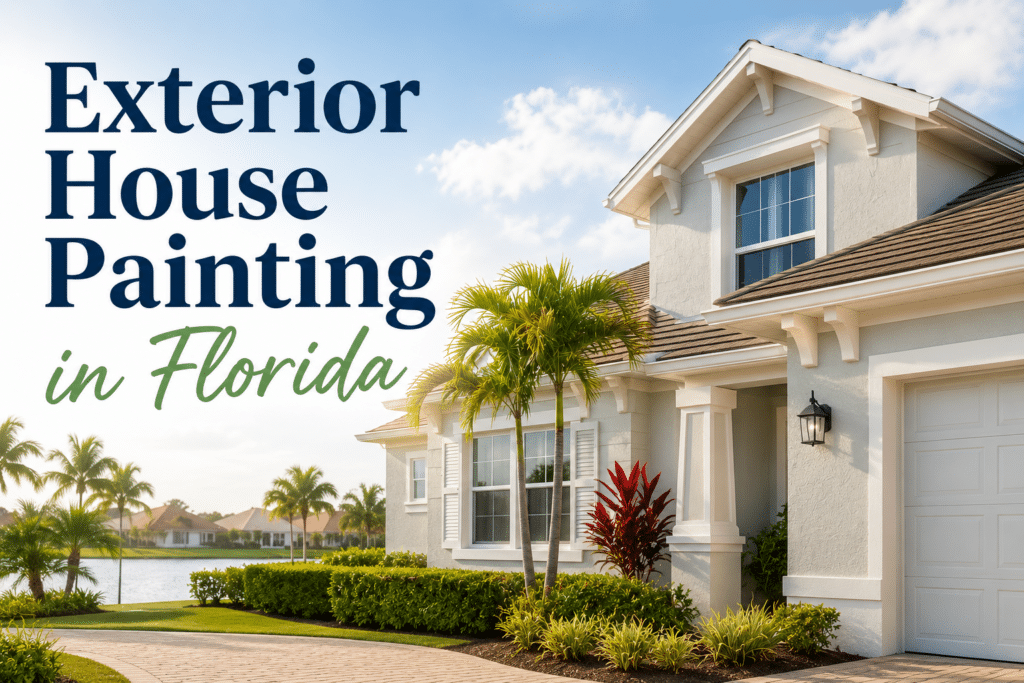
The same climate that makes living in Florida so enjoyable can be surprisingly hard on a home’s exterior. Between intense ultraviolet (UV) rays, high humidity, heavy rainstorms, and long stretches of summer heat, your paint works overtime to protect the surfaces beneath it. Understanding how our weather affects exterior house painting can help you recognize early signs of wear, make informed maintenance decisions, and keep your home looking its best for years to come.
Why Florida Is Especially Hard on Exterior Paint
Exterior paint serves two important purposes. It enhances your home’s appearance, and it creates a protective barrier against moisture, sunlight, and changing weather patterns.
In Clay County, those protective qualities are tested almost every day.
Unlike regions with long winters or mild summers, houses in Northeast Florida are frequently exposed to:
- Strong UV rays
- High temperatures
- High humidity
- Afternoon thunderstorms
- Wind-driven rain during tropical systems
- Rapid seasonal weather shifts
These conditions naturally wear down even high-quality paints, as no exterior coating is completely immune to our climate.
Four Ways Florida Weather Affects Exterior House Painting
1. Intense Sunlight and UV Exposure
Sunlight is one of the biggest contributors to aging paint.
Ultraviolet rays gradually break down the binders that hold paint together. As this happens, homeowners may notice:
- Fading colors
- Chalky residue on painted surfaces
- A loss of sheen
- Dry or brittle paint
South- and west-facing walls often show these effects first because they receive the greatest daily sun exposure.
2. Heat Causes Expansion and Contraction
Exterior building materials naturally expand as temperatures rise and contract as they cool.
Over hundreds of heating and cooling cycles, this movement places stress on painted surfaces. Eventually, small cracks may begin to form, allowing moisture to penetrate beneath the paint film.
Proper prep work and the use of quality exterior coatings help paint flex with these natural movements and reduce the likelihood of premature cracking.
3. High Humidity Creates Moisture Challenges
Humidity affects both painted surfaces and the painting process itself.
Moisture can encourage mildew growth on siding, trim, soffits, and shaded areas. It can also slow paint curing if conditions aren’t suitable during application.
Professional painters pay close attention to the weather before they begin exterior work. Applying paint under the wrong conditions can reduce adhesion and shorten the overall lifespan of the finish.
4. Heavy Rain Tests Your Home’s Protection
Frequent rain is a fact of life in Florida.
When paint begins to deteriorate, rainwater can seep into tiny cracks, gaps, or areas where caulking has failed. Left untreated, this moisture may contribute to:
- Peeling paint
- Bubbling finishes
- Wood deterioration
- Increased maintenance costs
Keeping exterior paint and caulking in good condition helps your home shed water the way it was designed to.
How Different Exterior Surfaces Respond to Florida’s Climate
Not every house reacts to weather the same way. Materials beneath your paint can influence how quickly it ages, how often maintenance is needed, and what preparation is required before repainting.
Understanding these differences can help you know what to watch for over time.
Wood Siding and Trim
Wood remains a popular choice for trim, soffits, fascia, shutters, and architectural details because of its classic appearance. However, it also requires some of the most attentive maintenance.
Heat, humidity, and frequent rainfall can cause wood to repeatedly absorb and release moisture. Over time, this expansion and contraction can place stress on painted surfaces that eventually leads to cracking, peeling, or exposed wood if the paint film begins to fail.
Routine inspections and prompt repainting can protect wood from moisture intrusion and potential deterioration.
Stucco
Stucco is extremely common because it holds up well in our climate, but that doesn’t mean that it’s maintenance-free.
Hairline cracks can develop as homes settle or experience seasonal expansion and contraction. Many of these are cosmetic, but they can also allow moisture to penetrate beneath the painted surface.
Proper repairs, high-quality primers, and elastomeric or premium exterior coatings—when appropriate for a residence’s condition—can provide added flexibility and protection.
Fiber Cement Siding
Fiber cement products have become increasingly popular because they resist insects, rot, and many moisture-related issues associated with traditional wood siding.
Even so, the painted finish is still exposed to the same sun, humidity, and rainfall as any other exterior surface, which means that colors may fade over time, caulking may deteriorate, and the protective coating will eventually need to be renewed.
With proper maintenance, fiber cement often provides an excellent long-term painting surface.
Brick and Masonry
Painted brick, concrete block, and other masonry surfaces tend to resist many of the movement-related issues found with wood, but they have their own maintenance considerations.
Without surface prep and a breathable coating, moisture can find its way through. It’s important to clean away dirt, mildew, and chalking before repainting so that new coatings can adhere properly and perform as intended.
Doors, Trim, and Decorative Features
Architectural details are often exposed to the harshest conditions on a home.
Front doors receive repeated sun exposure, trim collects rainwater around joints and windows, and decorative shutters or columns frequently experience accelerated wear because of their shape and orientation.
These are often the first places homeowners notice fading, peeling, or cracking. The sooner you address them, the easier it will be to improve curb appeal and prevent moisture intrusion.
Why Surface Preparation Should Match the Material
Because every exterior material behaves differently, professional painters must evaluate each surface individually in order to recommend cleaning methods, repairs, primers, caulking, and finish coats. Taking the time to prepare each material maximizes paint adhesion, improves durability, and extends the life of the finished project.
Whether your house features stucco, wood, fiber cement, brick, or a combination of materials, tailored prep work is one of the most important steps to achieving long-lasting results.
Signs Florida Weather Is Affecting Your Paint
Not every painting project begins because a homeowner wants a new color. Often, it’s because the existing paint no longer offers adequate protection.
Watch for signs such as:
- Peeling or flaking paint
- Cracks around trim and siding
- Bubbling or blistering
- A faded or uneven color
- Chalky residue when you touch the surface
- Mold or mildew
- Exposed wood
- Cracked or separated caulk around windows and doors
Fixing these issues early can often prevent more extensive repairs later.
How Homeowners Can Extend the Life of Exterior Paint
While Florida weather can’t be controlled, you can take several steps to maximize the life of your exterior paint.
Schedule Routine Inspections
Walk around your house at least once each year to look for peeling paint, damaged caulking, mildew, or areas beginning to fade.
Keep Surfaces Clean
Dirt, pollen, mildew, and algae can accumulate over time. Periodic cleaning or pressure washing maintains your home’s appearance and will help you notice problems that are just beginning to develop.
Replace Failing Caulking
Caulk plays an important role in keeping moisture out around windows, doors, trim, and joints. Replacing deteriorated portions will protect vulnerable areas from water intrusion.
Trim Landscaping
Trees and shrubs that rest against your home can trap moisture and accelerate the growth of mildew. Cutting that vegetation back can promote faster drying.
Address Small Repairs Promptly
Touching up damaged areas early often prevents small problems from becoming larger, more expensive repairs.
Why Proper Surface Preparation Matters
One of the biggest differences between a long-lasting paint job and one that fails prematurely is the prep work done before applying the first coat.
Exterior house painting typically includes:
- Cleaning and pressure washing
- Removing loose or peeling paint
- Sanding rough areas
- Repairing damaged surfaces
- Replacing failed caulking
- Priming bare materials
Skipping these steps may save time, but it often shortens the life of the finished project.
When Is It Time to Repaint?
There isn’t a universal timeline that applies to every Florida home. The orientation of yours, along with its building materials, paint quality, previous preparation, surrounding trees, and overall maintenance, all influence how long exterior paint lasts.
Evaluate your home’s condition rather than relying solely on its age. If you notice fading, peeling, cracking, or widespread caulking failure, it may be time to schedule a professional evaluation.
Choosing an Exterior Painting Contractor
Not every painting contractor approaches residential painting the same way.
When comparing companies, look for one that:
- Has residential painting experience in Northeast Florida
- Knows how local weather affects exterior coatings
- Performs surface preparation
- Uses products designed for our climate
- Explains the project fully and its anticipated timeline
When done right, high-quality painting is more than a fresh coat. It’s years-long protection for your home.
Frequently Asked Questions About Exterior House Painting
Does Florida humidity damage exterior paint?
High humidity doesn’t automatically damage paint, but it can affect how it cures if it’s applied under poor weather conditions.
How long does exterior paint last?
A paint’s lifespan depends on what type is used, as well as surface prep, maintenance, and your home’s level of exposure to sun and weather. Residences with significant southern or western exposure may experience faster fading.
Can exterior painting be completed during the rainy season?
Yes. Professional painters closely monitor the weather so that they schedule work during appropriate drying conditions to ensure proper adhesion and curing.
What type of exterior paint works best in Northeast Florida?
High-quality paint that is formulated to resist UV exposure, moisture, and mildew generally provide the best long-term performance. The ideal product depends on the surface being painted.
Should a home be pressure washed before painting?
In most cases, yes. Removing dirt, mildew, pollen, and loose debris creates a cleaner surface that helps new paint adhere properly.
How often should a Florida home be repainted?
Rather than following a fixed schedule, watch for signs of deterioration like peeling, fading, cracking, or failing caulking. A professional inspection can determine if repainting is necessary.
Protect Your Home With Exterior House Painting
With proper preparation, quality materials, regular maintenance, and application, paint can protect your home and enhance its curb appeal for many years.
If you’re beginning to notice fading, peeling, cracking, or other signs of wear, we offer exterior house painting services throughout Fleming Island, Orange Park, and surrounding Clay County communities. We’d be happy to evaluate your home’s condition, answer your questions, and help you determine the right solution for protecting your investment.
Contact us today to get started!