
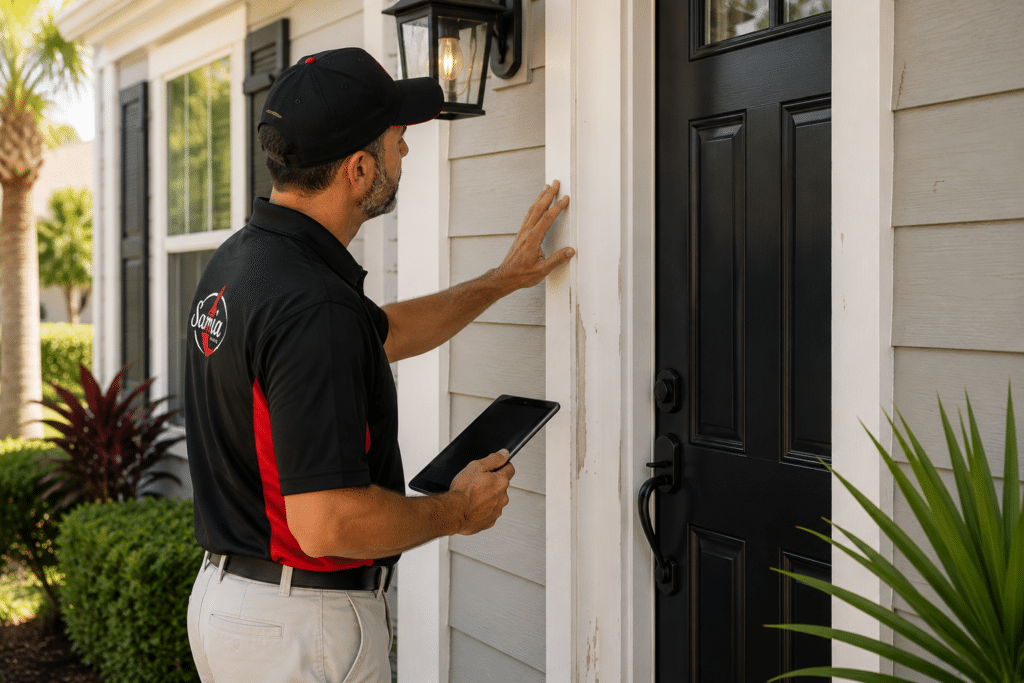
One of the first questions homeowners ask when planning a painting project is usually, “How much will it cost?” The answer depends on much more than the size of your home. To provide an accurate house painting estimate, we’ll first need to consider the condition of your existing paint, the amount of preparation that will be required, the materials we’ll need to use, and the complexity of the project.
Let’s look at each of these factors in more detail to understand why they’re important in making an informed decision about this kind of project, and how they’ll be reflected in any professional painting estimate.
What Affects House Painting Costs?
One of the biggest misconceptions about the cost of a house painting service is that it’s determined solely by square footage. While the size of your home certainly influences the amount of labor and materials that will be needed, professional painters like us evaluate many other factors.
The layout of your home—including the number of stories, ceiling heights, rooflines, and overall architecture—can significantly affect the time required to complete the project. If you have multiple gables, dormers, decorative trim, or difficult-to-reach areas, these can require additional setup and labor.
Then there’s the matter of your home’s surfaces. Exterior paint that is visibly weathered or peeling will require additional prep before a fresh coat can be applied. Interior projects may involve drywall repair, patching nail holes, sanding, or other corrections. Addressing these is important if you want a smoother finish and long-lasting results.
Material selection plays a role, too. Professional-grade paints and primers look better and are more durable. They cost more up front, but they generally provide better coverage, greater durability, and improved resistance to fading, moisture, and mildew.
Finally, we have to consider how much of a difference in color you want. If the plan is to go from a darker hue to a lighter one (or vice versa), it can require additional coats—particularly for bright whites, bold accents, and specialty finishes.
Why Preparation Matters
Preparation is one of the most important parts of any professional painting project, but it’s also something that customers can forget about until they see how much it can affect an estimate.
Prep work can vary based on whether you’re looking for exterior or interior painting. Exterior jobs usually involve pressure washing, scraping loose paint, sanding rough areas, replacing deteriorated caulk, and spot-priming exposed surfaces. On the flip side, interior work is focused on protecting furniture and flooring, patching drywall, sanding repairs, and carefully masking trim, fixtures, and other surfaces.
While these steps increase the labor required, they also create the foundation for a proper finish. When you’re comparing estimates and see one that is significantly lower than the rest, make sure to ask why. You’re likely to find that it’s due to less prep work than it is fewer coats of paint.
Interior vs. Exterior Painting
Along with differences in preparation, interior and exterior painting can involve different materials and challenges.
Exterior painting requires careful attention to the weather, surface exposure, and long-term durability. Sunshine, humidity, heavy rainfall, and changing temperatures can all influence when paint should be applied and how well it performs over time. Professional painters should also spend considerable time protecting the existing landscaping, cleaning surfaces, and ensuring a home is properly prepared before painting begins.
Interior painting focuses more on protecting furnishings and flooring, preparing walls and ceilings, creating clean paint lines, and minimizing disruption inside the home. Although weather isn’t usually an indoor concern, attention to detail is just as important if you want a smooth, attractive finish.
Because every project is different, neither interior nor exterior painting is automatically more expensive than the other. The overall scope of work will determine the final cost.
What Should a Professional Painting Estimate Include?
When you request an estimate, it should clearly outline the scope of work. Look for details about:
- The areas and surfaces to be painted
- Anticipated preparation work
- Any repairs included
- The paint manufacturer and the product line
- The expected number of coats
- Cleanup procedures
- An estimated project timeline
- Warranty information
A well-written estimate avoids surprises and makes it easier to compare contractors fairly.
How to Compare Painting Quotes
When comparing estimates, it can be tempting to look for the cheapest option. Please keep in mind that a lower price point doesn’t automatically mean you’ll be getting better value if that reduced estimate is due to less preparation, lower-quality materials, or a smaller scope of work.
As you review your options, we encourage you to consider factors such as:
- The amount of prep work included
- The quality of the paint products being used
- The contractor’s experience and reputation
- Licensing and insurance
- Warranty coverage
- How quickly your questions are answered
Once you understand exactly what’s included, you’ll be able to make a fair comparison and invest in quality work that’s designed to last.
Is Painting Your Home a Good Investment?
We think so. For starters, it improves your home’s appearance and protects it from the effects of Florida’s weather. A fresh coat can also enhance curb appeal, preserve siding and trim, breathe new life into worn interior walls, and maintain your home’s overall value. And, if you ever decide to sell, a professional paint job is arguably one of the most cost-effective, visible improvements you can make without undertaking a major renovation.
FAQs About House Painting Costs
Does a larger home always cost more to paint?
Generally, yes. Larger homes require additional labor and materials, while architectural complexity, preparation requirements, and accessibility can also influence the scope of work.
Why do painting estimates vary between companies?
Painting estimates often differ because contractors include different levels of preparation, paint quality, repairs, warranty coverage, and labor. Comparing the full scope of work—not just the price—provides a more accurate picture of value.
Is exterior painting usually more expensive than interior painting?
Not necessarily. Their prep work may differ—weather-related planning for exteriors, and finish work, drywall repairs, and furniture/flooring protection for interiors—but the specific requirements of the project will ultimately determine the cost.
Can preparation affect house painting cost?
Yes. Homes requiring pressure washing, scraping, sanding, repairs, or extensive caulking generally require more labor than homes that are already in good condition. Proper preparation is also one of the biggest factors in achieving a durable, long-lasting finish.
Should I get more than one painting estimate?
Comparing estimates from reputable painting contractors can help you understand the recommended scope of work and ensure you’re making an informed decision. Just be sure you’re comparing similar levels of preparation, materials, and services.
Request a Professional House Painting Estimate
Every home is unique, which is why the most accurate way to understand your house painting cost is through a professional evaluation. Whether you’re in Fleming Island, Orange Park, or the surrounding Northeast Florida area, we can provide you with a detailed estimate that explains the recommended preparation, materials, and scope of work to refresh your home.
Contact us today to learn more and schedule your free estimate.