
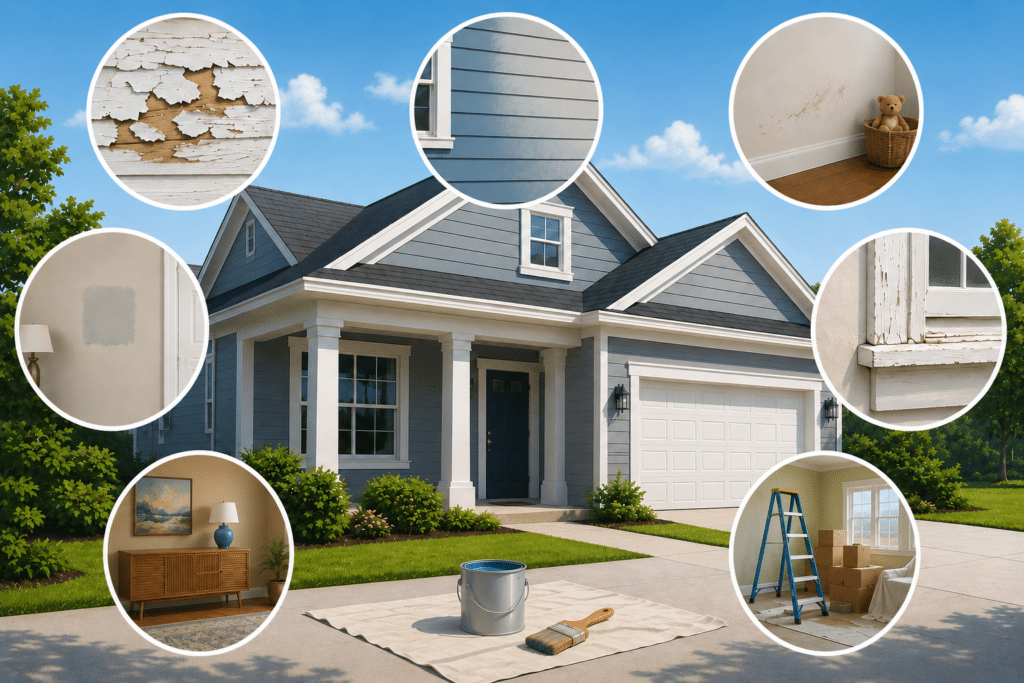
Some signs that it’s time to repaint your home are more obvious than others. Peeling exteriors can be easier to spot, but you may not immediately notice fading, worn interior walls, aged trim, or even changes in your home’s style that make professional house painting services worth considering.
Here are seven signs to watch for when it’s time to apply a fresh coat.
1. Your Paint Is Peeling, Cracking, or Flaking
Peeling, cracking, and flaking are some of the clearest indications that an existing layer of paint is beginning to fail. A small peel doesn’t necessarily mean that your entire home needs to be addressed, but if you’re finding these problems across multiple surfaces, it may be time for a professional evaluation.
While it may be tempting to simply add another coat, that isn’t the full solution. Loose material needs to be removed so the underlying surface can be evaluated and properly prepped.
This is especially important when painted wood is involved. Peeling paint doesn’t automatically mean the wood needs replacement, but any rot or damage underneath should be addressed before painting begins.
2. Your Exterior Colors Have Noticeably Faded
Paint doesn’t have to peel before it shows its age. Color can gradually lose its appearance, particularly on exterior surfaces that receive a lot of sunlight. Because fading usually happens slowly, you may not realize how much that color has changed until you compare an exposed area with one that’s more protected.
Uneven fading can also leave certain sections of a house looking noticeably different from one another.
In Jacksonville, exterior paint is regularly exposed to intense sunshine, heat, humidity, and rain. If your home’s color has become dull or inconsistent, a fresh coat can restore a more uniform appearance even when the existing paint hasn’t begun to peel.
3. Your Interior Walls Are Scuffed, Stained, or Difficult to Clean
Indoor walls take a beating from people, pets, furniture, fingerprints, spills, and countless other sources. Hallways, entryways, kitchens, living areas, and children’s rooms are prime examples. Some marks may be minor and easy to remove at first, but years of accumulated stains and other imperfections may eventually leave walls looking worn despite cleaning.
Touch-ups can help with isolated problems, but there comes a point when wear becomes widespread and repainting offers a more consistent solution.
4. Your Paint Touch-Ups Are Becoming Obvious
You may find touch-up paint to be useful when you’re dealing with a small scuff, repaired nail hole, or other isolated imperfection. But as those touch-ups accumulate, the corrections can become more noticeable. Several factors can make a touch-up stand out from the surrounding wall, including differences in sheen, application method, and changes to the existing paint as it ages.
Repeated corrections can eventually leave a wall looking patchy. When that happens, repainting the wall in its entirety may be more effective than treating one area at a time.
5. Your Caulk or Painted Trim Is Showing Its Age
Windows, doors, fascia, soffits, and other painted trim deserve attention when you’re evaluating the condition of your home. You may notice cracked or separated caulk, peeling paint, open joints, fading, or other visible wear. Like our point about wood, these signs don’t necessarily mean the underlying material needs replacement, but they shouldn’t be ignored.
If trim remains solid and stable, preparation and repainting may be enough to restore its appearance and protective coating. But if that trim has turned soft, begun to rot, split significantly, or become damaged, it may require repair or replacement first.
The important distinction is whether you’re looking at paint failure or material damage. A professional evaluation can determine what actually needs attention before new paint is applied.
6. Your Colors No Longer Fit Your Home
Paint doesn’t have to be damaged before you decide it’s time for something new. Maybe your interior colors were chosen years ago and no longer match your furniture, flooring, or personal style. Perhaps you’ve remodeled one part of your home and the surrounding rooms now feel disconnected. Or your exterior color may simply no longer create the curb appeal you want.
These are all perfectly valid reasons to repaint.
Updating the color can make existing spaces feel dramatically different without requiring structural changes. It can also help create greater consistency between rooms or give an exterior a more current appearance.
In short, you may decide to repaint not because something is inherently wrong, but simply because you’re ready for a change.
7. You’re Preparing for a Major Event
Certain moments naturally cause homeowners to take a closer look at their surroundings.
You may have recently purchased a home and want to give it a fresh look. You could be finishing a renovation or remodel and want your other rooms to match it. Perhaps you’re preparing to sell and want the property to be more inviting to prospective buyers.
House painting services can be incorporated into any of these projects to give the affected spaces a more cohesive, finished appearance.
You don’t necessarily need to repaint every surface. Depending on your goals, updating several high-traffic rooms or refreshing exterior trim may be enough to make a noticeable difference.
Do You Need to Repaint the Entire House?
Not necessarily. Noticing one or two of these signs doesn’t automatically mean you need a complete interior or exterior repaint. The scope of the project will depend on where the problems are located, how widespread they are, and the condition of the surrounding surfaces.
This is one benefit of having your home evaluated before deciding what to do. A professional painter can help you understand and prioritize which surfaces need attention, what preparation may be required, and which areas can be left alone.
Common Questions About House Painting Services
Should I repaint if my exterior paint is only faded?
Not necessarily. Fading can affect appearance but doesn’t automatically mean that the coating has failed. Significant or uneven fading can be a good reason to inspect the exterior and decide if repainting will restore the color that you want.
Can you paint over peeling paint?
Not without proper preparation. Loose or peeling paint should be addressed before applying a fresh coat. The failing material typically needs to be removed and the underlying surface properly prepped so that the new coating has a stable surface to adhere to.
Do I have to repaint an entire room?
Not always. Small touch-ups can work well when the existing paint is in good condition and the new paint blends successfully. If repairs or touch-ups are becoming more obvious, repainting the entire surface may provide a more consistent result.
Why hire professional house painters instead of doing it yourself?
Professional house painters can evaluate surface conditions, identify needed preparation, recommend products, protect surrounding areas, and apply coatings consistently. These considerations are important when it comes to repairs, difficult-to-reach areas, extensive prep work, or multiple surfaces.
Can interior and exterior painting be part of the same project?
Yes. Interior and exterior house painting services can be planned together, depending on their scope, scheduling, weather, and your priorities. A professional estimate can organize the work into an appropriate sequence.
Is Your Home Ready for a Fresh Coat?
Peeling paint, faded colors, accumulated wear, obvious touch-ups, aging trim, or an outdated color scheme can all signal that it’s time for a repaint. Some areas may only need minor attention, while others can benefit from preparation and a fresh coat.
If you’re seeing any of these signs in your home, we’d be happy to help you evaluate them. Contact us today to learn more about our house painting services or request a free estimate.