
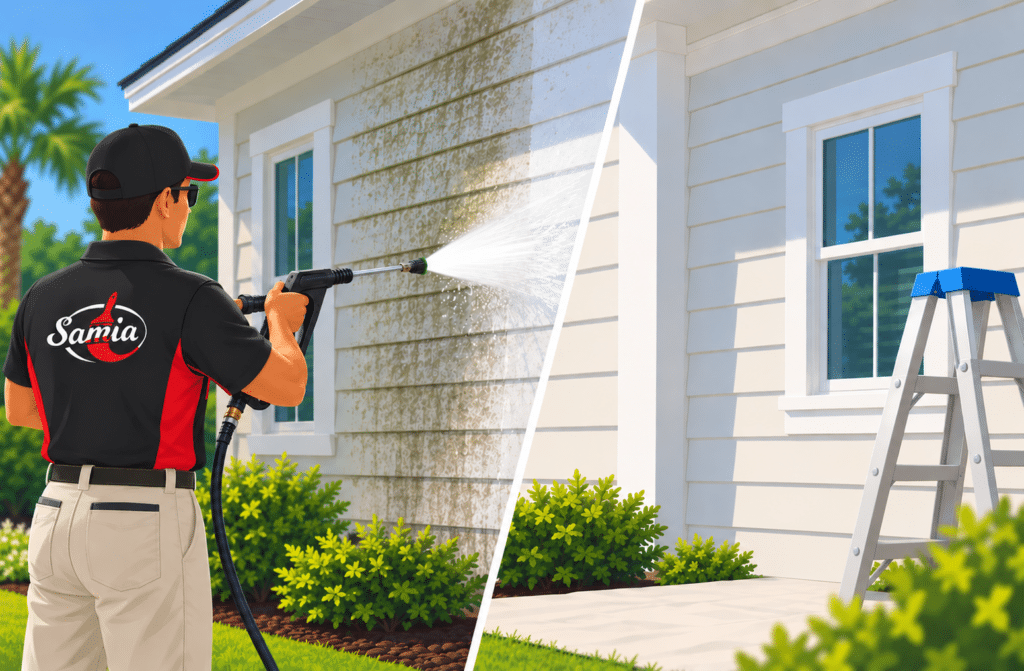
A fresh coat of exterior paint can improve your home’s appearance and help protect its surfaces from the weather. But before it’s applied, what’s already on your home needs some attention—namely, dirt, dust, mildew, pollen, and other buildup that’s collected on exterior surfaces over time. Painting directly over these can interfere with how well the new coating adheres and affect the finished appearance. That’s why cleaning is an essential part of prep work.
Pressure washing before painting can be highly effective, but keep in mind that different surfaces may require different levels of pressure to be properly cleaned and avoid potential damage.
Why Is Cleaning Important Before Painting?
Exterior paint performs best when it’s applied to a properly prepped surface. If dirt, chalky residue, or mildew are still present, they can keep the new coating from adhering correctly.
Cleaning essentially gives your contractor a blank canvas. It can also uncover areas that may need additional prep work or repair—for example, addressing failed caulk, cracks, damaged wood, and other defects.
Depending on the surface and cleaning method, pressure washing can be effective at removing:
- Dirt and dust
- Pollen and other environmental buildup
- Loose surface debris
- Cobwebs
- Some chalky residue from aging coatings
- Mildew and other biological growth when treated appropriately
Does Pressure Washing Help Paint Adhere Better?
Pressure washing alone doesn’t guarantee your paint will adhere properly. The surface you want painted also needs to be sound, prepped, and sufficiently dry.
For example, an exterior wall may look dramatically cleaner after washing but still have loose or peeling paint that needs scraping or sanding. Gaps around trim may need to be caulked, while damaged materials may need repair.
Think of washing as one step in a larger process.
Should Every Exterior Surface Be Pressure Washed?
Not necessarily. Exterior materials vary based on their durability, condition, and ability to tolerate water pressure. Concrete, masonry, stucco, siding, wood, and painted trim can all require different cleaning approaches. An older or deteriorated surface may also need more care than one that’s in good condition.
Excessive pressure can damage certain materials or existing coatings. It can also force water into gaps, joints, or other areas where you don’t want moisture. For that reason, a professional painting contractor should consider the surface being cleaned and adjust their equipment, pressure, cleaning products, and technique accordingly.
Pressure Washing vs. Soft Washing: What’s the Difference?
These terms are sometimes used interchangeably, but they’re actually separate ways to clean exteriors. Pressure washing relies more heavily on the force of pressurized water to remove buildup, while soft washing uses much lower pressure along with appropriate cleaning solutions.
Neither method is automatically right for every part of a house. The right technique depends on the materials involved, their condition, and the buildup present.
Can Pressure Washing Reveal Problems Before Painting?
Pressure washing can reveal issues with an exterior surface before painting begins. Dirt or organic growth may hide peeling coatings, cracks, deteriorated caulk, damaged wood, or other areas that need to be prepped.
If cleaning reveals deterioration, painting over it isn’t the answer. The condition and, when appropriate, its underlying cause should be evaluated first.
How Long After Pressure Washing Can You Paint?
A washed surface needs enough time to dry, which varies based on the material, humidity, sunlight, and how much moisture the surface absorbed during cleaning. Florida’s weather conditions make it hard to give a universal timeframe.
Your painting contractor should evaluate whether the surface is ready, not assume it is dry based solely on how much time has passed.
Painting a surface before it has adequately dried can interfere with coating performance, so pressure washing and painting should be scheduled accordingly.
Should You Pressure Wash Your House Yourself Before the Painters Arrive?
If you’re hiring a professional painting contractor, ask if pressure washing is part of their prep work, or whether they have specific requirements. If you take it upon yourself to wash a surface shortly before their team arrives, it may still be too damp for the next stages of preparation or painting.
Your home’s condition is also important. Too much water pressure, the wrong technique, or directing water into vulnerable areas can create additional problems.
Is Pressure Washing Always Necessary?
Not every exterior painting project requires the same cleaning method, but surfaces should generally be clean and prepared before painting. A contractor may determine that pressure washing is suitable for much of the exterior, or that certain areas will require a gentler approach.
Prepare Your Home for a Fresh Coat
If you’re planning an exterior painting project here in Northeast Florida, Samia Painting is ready to help! We’ll review the areas you have in mind to determine the right cleaning approach and any additional prep work needed before painting begins. Call us to schedule a free estimate!