
You’ve hired a professional painting contractor, selected your colors, and scheduled the work. Now what?
While professional painters handle much of the technical prep, there are several things homeowners can do before a crew arrives. Clearing work areas, protecting personal belongings, and making arrangements for everyday activities often help a project run more smoothly.
Good house painting preparation starts with understanding what your contractor will handle and what you should take care of. Whether you’re tackling a single room or your entire home’s exterior, here’s how to get ready.
What Should You Confirm With Your Painting Contractor Before Work Begins?
Talk with your contractor about the scope of the project and what they expect you to do. Make sure you understand which rooms or exterior areas will be painted, the anticipated schedule, and whether your final color and finish selections are confirmed.
It’s also good to ask about furniture moving, surface preparation, minor repairs, and other work included in your estimate. Some contractors may move and protect larger pieces of furniture, while others may ask you to have certain areas cleared prior to their arrival.
Knowing these details in advance can prevent confusion and unnecessary delays.
How Should You Prepare Your Home for Interior Painting?
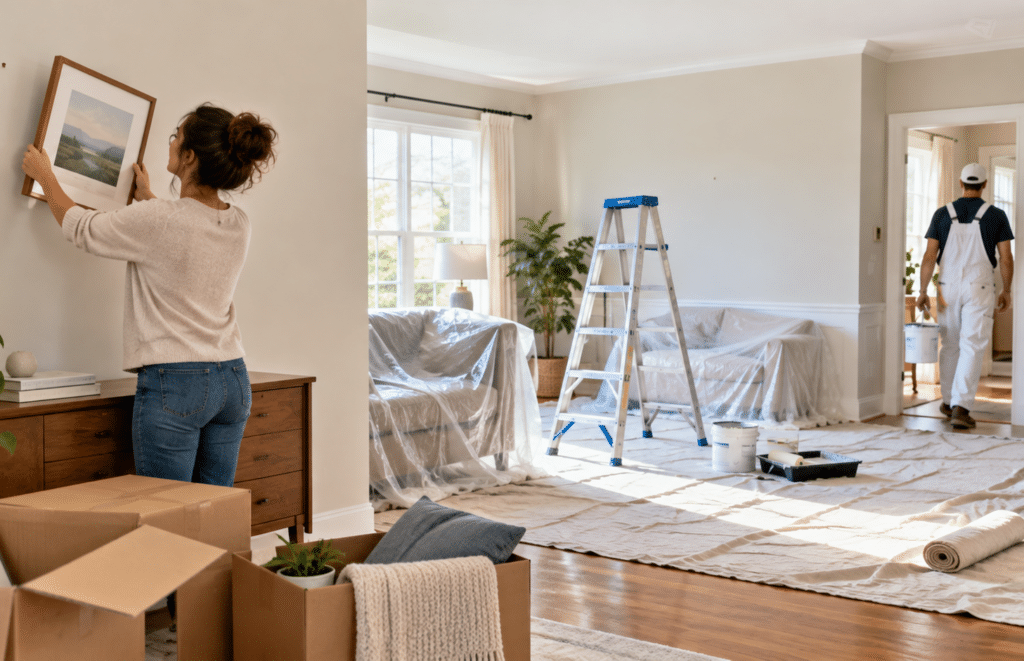
For interior projects, the priority is making sure painters can access the surfaces they’ll be working on while keeping your belongings out of the way.
Depending on which rooms are being painted, you may need to:
- Remove artwork, photographs, mirrors, and other wall decorations.
- Put away fragile items, valuables, and personal belongings.
- Move smaller furniture, lamps, and decorations away from work areas.
- Clear shelves, closets, or cabinets if they’re included in the project.
- Make sure painters can access walls, ceilings, doors, and trim.
- Discuss large or heavy furniture with your contractor before attempting to move it.
Does this mean you’ll have to empty an entire room? Not necessarily. Your contractor can explain how much space their crew will need and whether they can handle moving or protecting larger furnishings.
Also, ask before removing outlet covers, light fixtures, or other attached items. These tasks may already be part of the agreed-upon prep work.
What Should You Do Before Exterior House Painting?
Exterior painting requires a different kind of preparation. Instead of clearing rooms, you’ll want to make sure a crew can safely and easily access the areas around your home.
Start by looking at what might be in the way, like patio furniture, grills, planters, decorations, and other portable items. Vehicles may need to be relocated to keep driveways accessible. Also address landscaping, including bushes, branches, and other vegetation growing close to the house.
If you have an irrigation system, make sure to address it. Sprinklers that repeatedly wet siding, trim, or other exterior surfaces may interfere with preparation, drying, or painting. Ask your contractor when to turn off your system and when normal watering can resume.
Finally, identify any delicate plants, exterior decorations, or property features that need additional protection.
Should You Clean Your Home Before Painters Arrive?
Whether you should clean surfaces ahead of time depends on their condition and what’s included in your contractor’s services. Professional prep may involve cleaning, scraping loose paint, sanding, caulking, or priming, depending on the surfaces being painted and the agreed scope of work.
Before tackling any of these tasks yourself—including pressure washing—confirm what’s included in your contractor’s services.
How Can You Prepare for Children, Pets, and Daily Activities?
Painting can temporarily affect how you use certain areas of your home. If you have children or pets, plan to keep them away from active work areas and freshly painted surfaces. Depending on the size of the project, that may mean using another part of the house or arranging for them to stay elsewhere.
If you work from home, ask which rooms will be painted and when. Painting bedrooms, kitchens, hallways, or other frequently used spaces may require temporary adjustments to your normal routine. For interior painting, discuss ventilation, paint products, and when rooms can be used normally again.
What Access and Utilities Will Your Painting Crew Need?
Professional painters may need access to electricity, water, driveways, gates, and specific areas of your property. Ask what they’ll require before the project begins. If you won’t be home while they’re working, make sure you’ve made arrangements for how they can enter while keeping your property secure.
Communicate any instructions involving alarm systems, locked gates, pets, parking, or areas that should remain off-limits, even if these arrangements seem minor.
What Should You Do the Day Before Painting Begins?
Let’s review a simple checklist you can use to make sure everything is ready.
- Confirm the schedule. Verify your painter’s expected arrival time.
- Finalize your selections. Make sure paint colors, finishes, and project details have been agreed upon.
- Clear work areas; move furniture and outdoor items. As needed, remove personal belongings, decorations, and other items.
- Check access points. Make sure contractors can use doors, gates, driveways, and pathways where applicable.
- Plan for children and pets. Arrange for them to stay clear of active work areas.
- Ask any remaining questions. Clarify anything you’re unsure about before work gets underway.
For exterior projects, your contractor may also need to adjust the painting schedule if weather conditions change.
What Preparation Should Professional Painters Handle?
Homeowners can help make work areas accessible, but professional painters generally handle the technical prep outlined in the project agreement. They may be responsible for protecting nearby surfaces, evaluating existing coatings, removing loose paint, sanding, caulking, making agreed-upon repairs, and applying primer where necessary.
All of these tasks are important because paint performs best when applied to a properly prepared surface. Simply covering up dirt, damage, or defects can negatively affect the finished result.
Your estimate and project agreement should clarify which preparation services are included.
Get Your Home Ready for a Fresh Coat of Paint
When it comes to house painting preparation, much of what homeowners need to do involves clearing spaces, protecting personal belongings, confirming project details, and coordinating access. Your painting crew can then focus on the agreed-upon prep and painting work.
If you’re considering an interior or exterior painting project in Fleming Island, Orange Park, or other areas of Northeast Florida, Samia Painting would be happy to help. Contact us to schedule a free estimate!